Other compounds
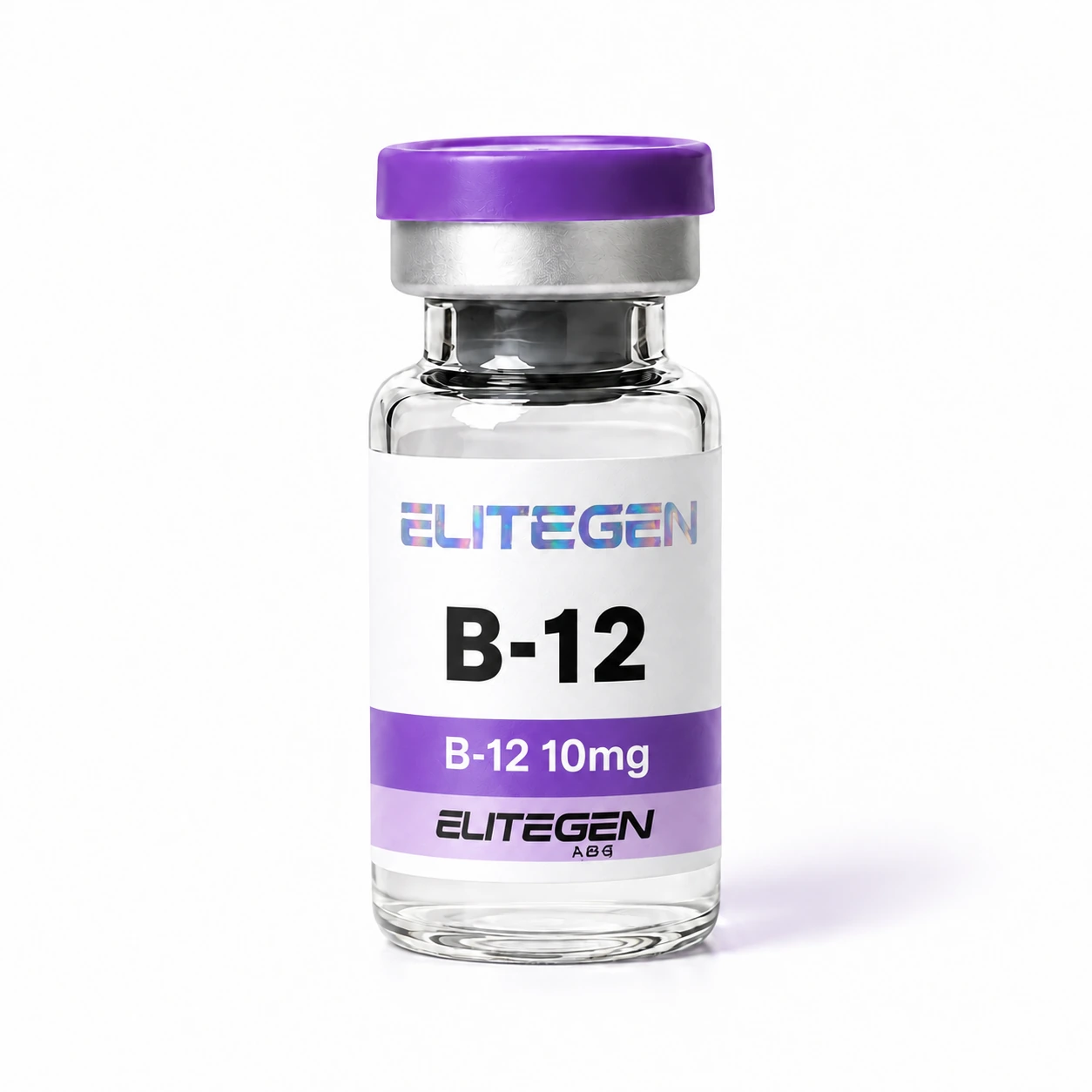
B-12
A cobalamin-family research material for enzyme-cofactor and one-carbon chemistry.
Per unit
For in vitro laboratory research only. Not for human or veterinary use, or as a dietary supplement.
Research profile
Scientific background
Vitamin B12 refers to a family of cobalamin compounds involved in enzyme-cofactor chemistry. The reference outlines cobalamin-dependent reactions and one-carbon metabolism, providing biochemical context for analytical work with this compound family.
Laboratory research topics
- Cobalamin-dependent enzyme reactions.
- Chemical-form distinctions in one-carbon and cofactor chemistry.
Evidence in context
Established biochemical reference
Cobalamin species have different chemical identities and analytical behavior. A family-level reference does not specify the species or physical form of an individual preparation.
Published studies describe their own experimental models and preparations. They do not establish the identity, quality, or suitability of an EliteGen batch for a particular experiment.
References 1
- Vitamin B12 — Fact Sheet for Health Professionals
2025 · NIH Office of Dietary Supplements authoritative scientific fact sheet
Product documents
Certificate of Analysis
For document availability, contact info@elitegenresearch.com.
Specifications & Documents
- Compound
- B-12
- Selected amount
- 10 mg
- Country of Manufacture
- USA
- Intended use
- In vitro laboratory research only
- Certificate of Analysis
- COA not yet available for the selected amount.
- COA coverage
- Report-specific samples and lots.
Review the applicable batch documents before purchasing. Catalogue information is not a batch-specific certificate of analysis.
The research library
Read the science.
Understand the documents.
How to read a Certificate of Analysis
A practical reading order for connecting a report to its sample and understanding what each reported result means.
3 min readRead guide Analytical methods02HPLC, mass spectrometry and peptide content
Understand the measurement behind a result before comparing percentages, molecular masses or amounts.
3 min readRead guide