Research use only
Materials are offered to qualified researchers aged 21 or older for in vitro laboratory research. They are not for human or veterinary use, personal use, or dietary supplementation.
Our approach
Know the compound, the amount, and the documentation attached to it.
Materials are offered to qualified researchers aged 21 or older for in vitro laboratory research. They are not for human or veterinary use, personal use, or dietary supplementation.
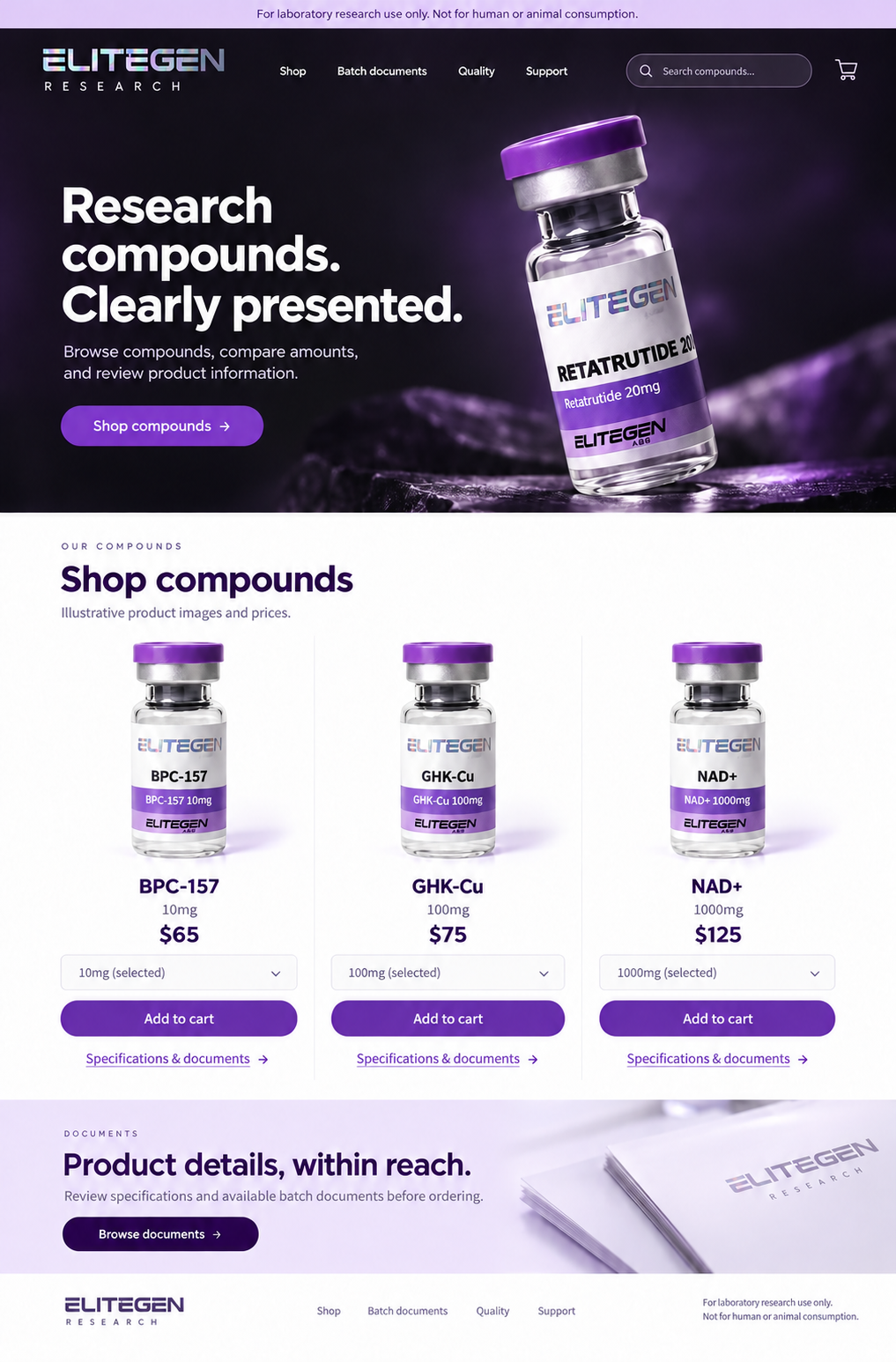
Product names, amounts, and prices are presented together so you can compare available variants.
Available certificates of analysis are linked by compound and reported amount. Each report describes its identified sample and lot. Compare those details with the product documentation.
Compare the compound, amount, lot number, and report date with the material's documentation. Results describe the sample identified in that report.
The nominal amount identifies the sample as labeled. An assay reports a measured result. Read the method, units, and specification together; mg per vial and mg/g are different measurements.
Identity, purity, assay, sterility, and endotoxins are separate tests. A purity percentage alone does not establish sterility or endotoxin levels. Use only the tests and results actually reported.
The research library
A practical reading order for connecting a report to its sample and understanding what each reported result means.
3 min readRead guide Analytical methods02Understand the measurement behind a result before comparing percentages, molecular masses or amounts.
3 min readRead guide Compound terminology03A guide to the chemical details that help connect a product name, a literature reference and an analytical record.
3 min readRead guide Research documentation04Use each source for the question it can answer, then keep the connections visible in your laboratory records.
3 min readRead guide