Peptides
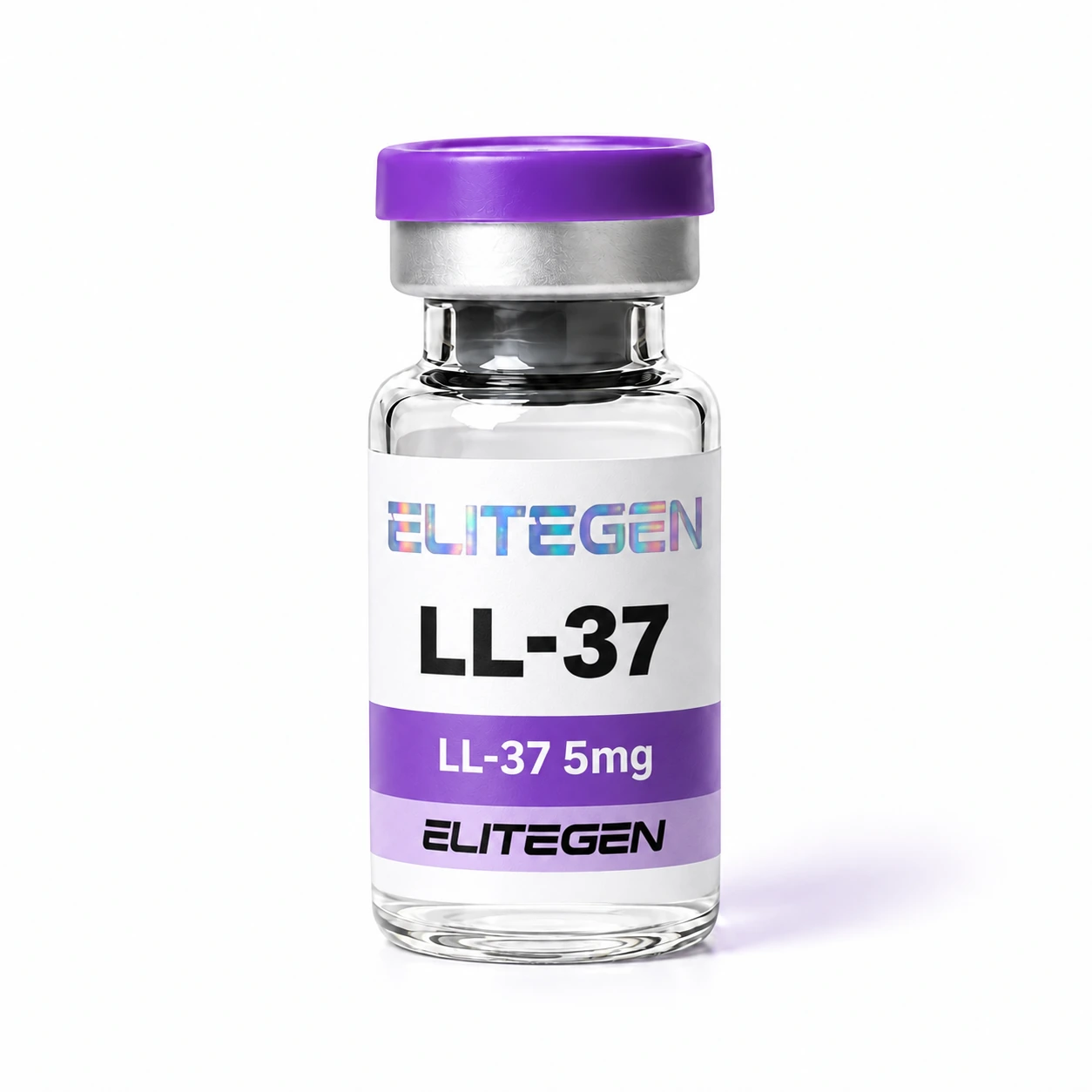
LL-37
A cathelicidin-family peptide studied in microbial-membrane and lipopolysaccharide assays.
Per unit
For in vitro laboratory research only. Not for human or veterinary use, or as a dietary supplement.
Research profile
Scientific background
LL-37 is a human cathelicidin-family peptide. The cited laboratory study examines microbial assay responses, membrane interactions and lipopolysaccharide binding under defined experimental conditions.
Laboratory research topics
- Microbial-membrane interactions in laboratory assays.
- Lipopolysaccharide interactions and medium-dependent measurements.
Evidence in context
Original in vitro microbiology study
Strain, medium composition and peptide concentration affect assay results. Laboratory antimicrobial measurements do not establish a therapeutic use or activity in other preparations.
Published studies describe their own experimental models and preparations. They do not establish the identity, quality, or suitability of an EliteGen batch for a particular experiment.
References 1
- Activities of LL-37, a cathelin-associated antimicrobial peptide of human neutrophils
1998 · Original in vitro microbiology and membrane study
Product documents
Certificate of Analysis
For document availability, contact info@elitegenresearch.com.
Specifications & Documents
- Compound
- LL-37
- Selected amount
- 5 mg
- Country of Manufacture
- USA
- Intended use
- In vitro laboratory research only
- Certificate of Analysis
- COA not yet available for the selected amount.
- COA coverage
- Report-specific samples and lots.
Review the applicable batch documents before purchasing. Catalogue information is not a batch-specific certificate of analysis.
The research library
Read the science.
Understand the documents.
How to read a Certificate of Analysis
A practical reading order for connecting a report to its sample and understanding what each reported result means.
3 min readRead guide Analytical methods02HPLC, mass spectrometry and peptide content
Understand the measurement behind a result before comparing percentages, molecular masses or amounts.
3 min readRead guide