What exactly did the fibroblasts make?
Imagine two dishes of fibroblasts. A reading from one dish shows more newly made collagen. Your first question might be whether the dish held more cells. That possibility makes the 1988 GHK-Cu study more interesting to read: Maquart and colleagues reported a higher collagen synthesis measurement in their cultures and found that the change was independent of cell number.
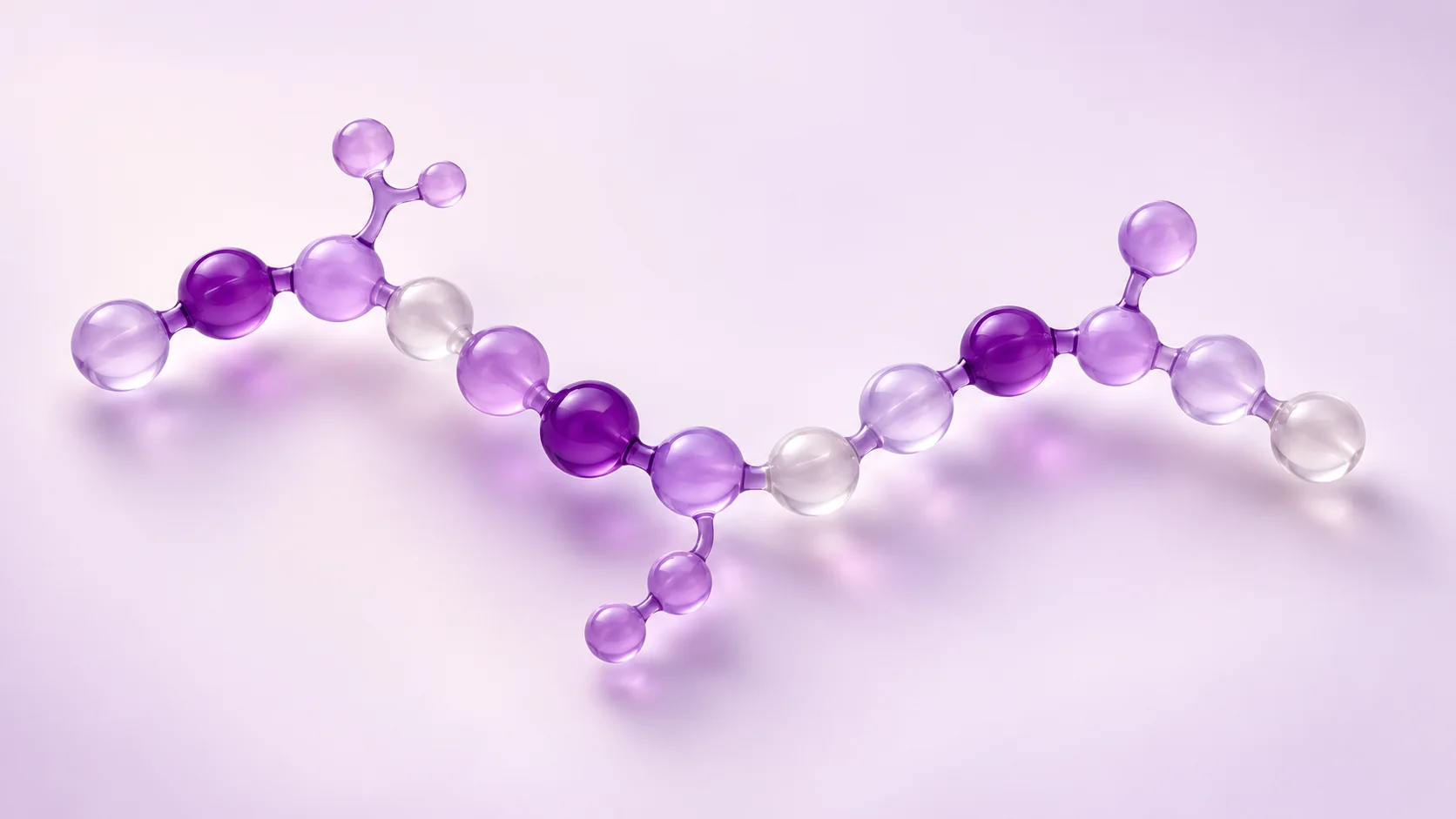
The material in that study matters. GHK is shorthand for glycyl-L-histidyl-L-lysine, a peptide made of three amino acid residues. GHK-Cu denotes the copper complex. When writing up a comparison, keep the copper designation with the material. If an experiment is labelled GHK alone, first check what the authors actually tested.
The 1988 finding answers a question about production in a culture system. It also gives you a useful habit for any result reported per dish: check what happened to the number of cells, and see what the authors used to compare samples.
The matrix is a material with more than one component
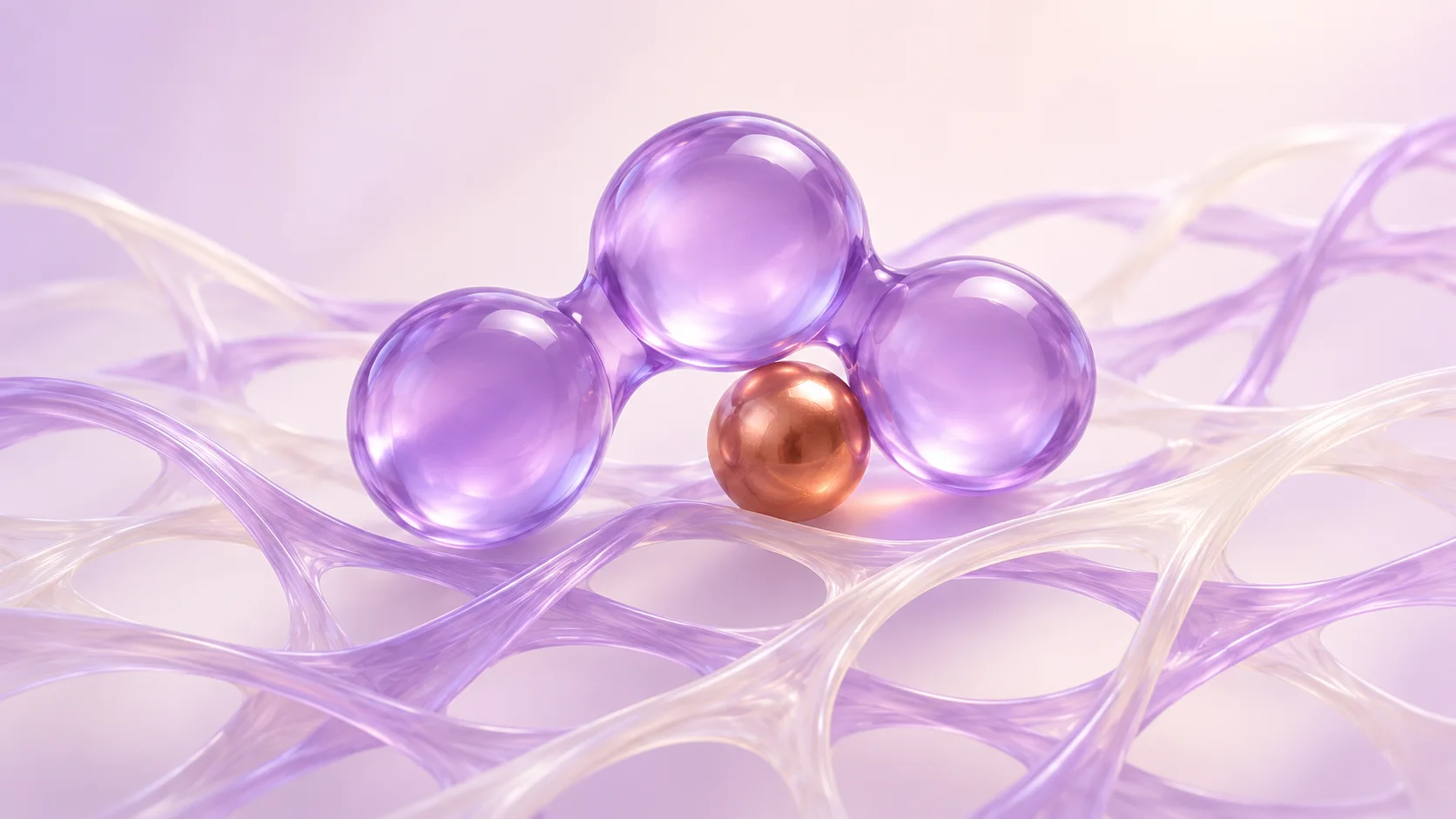
Extracellular matrix is the name for the network of material around cells. A look at the illustrations in Alberts and colleagues' cell biology chapter makes the variety visible. Collagen forms fibres, and carbohydrate chains called glycosaminoglycans are among the components of the hydrated material around them. Many of these chains attach to proteins, forming proteoglycans. Fibroblasts are an important source of matrix material in connective tissue.
That mixture gives researchers more than one endpoint to choose from. A study might ask how much of one component is present. It might measure the relative amounts of two components. It might look at the organisation of fibres. All three can be described as matrix measurements. The detail that lets you make sense of a figure is the endpoint the authors chose.
Imagine two samples that yield the same total collagen amount when analysed. One sample could contain a different arrangement of fibres. You would need a measurement that preserves information about arrangement to answer that question.
Inside the rat tissue chamber
The 1993 follow-up from Maquart and colleagues changes the setting. The team collected material from implanted mesh chambers in rats. They used saline comparisons and measured several parts of the collected material, including collagen, glycosaminoglycans, DNA and total protein. They also measured selected messenger RNAs, which carry information used to make proteins.
The study reported more collagen and glycosaminoglycans in the GHK-Cu conditions. The team observed increases in type I and type III collagen messenger RNAs, while its tested TGF-beta messenger RNA measurement remained unchanged. A separate comparison tripeptide produced no significant effect in the study. The unchanged endpoints and comparisons belong in a faithful account because they put specific limits on the overall pattern.
Reading the paper means keeping the animal model visible. A chamber is a defined collection site within that model. What researchers recover there reflects the experimental preparation and the time at which they made the measurement.
The difference between making collagen and finding it later
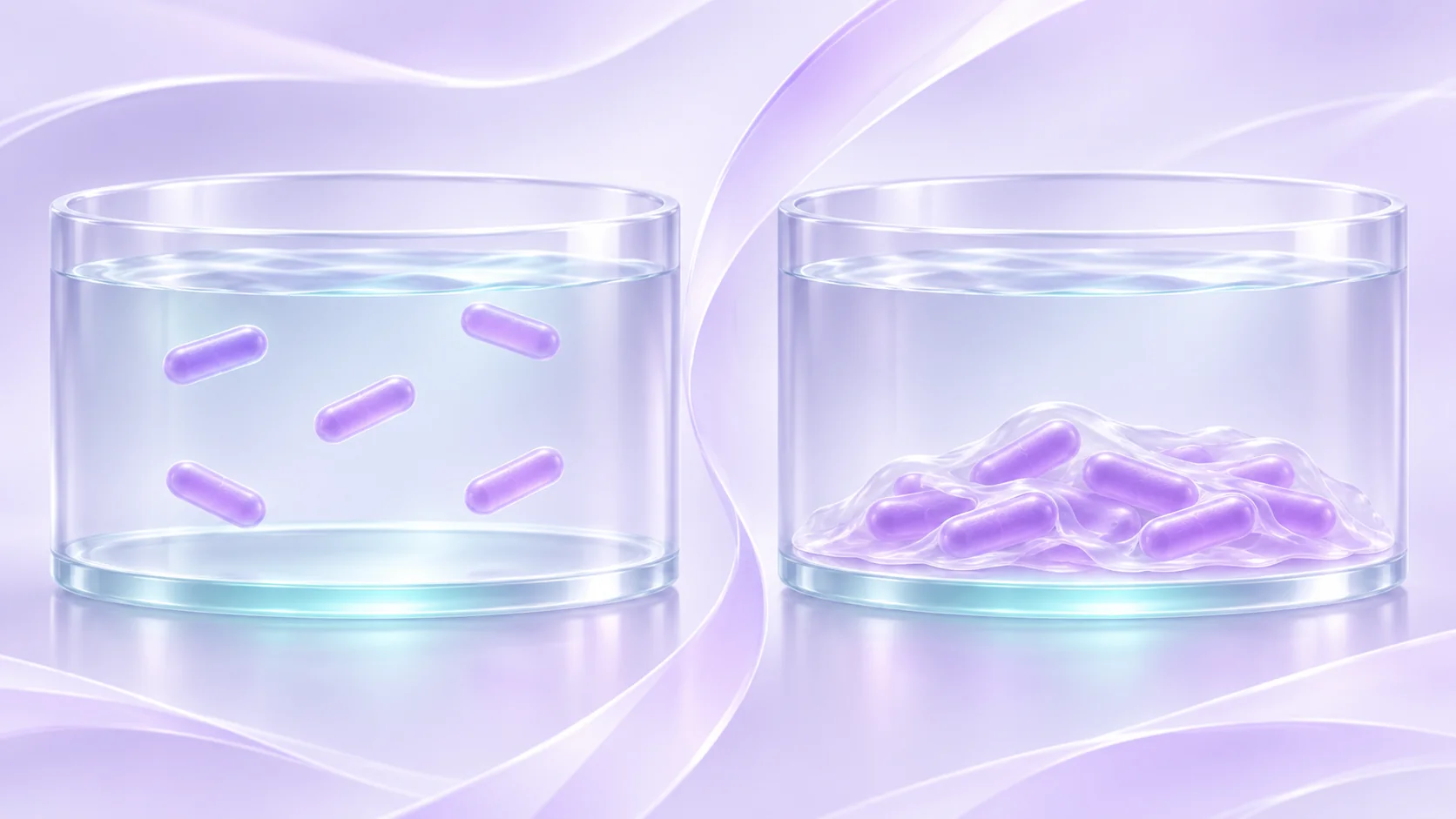
Here is a simple way to read the difference between synthesis and accumulation. Suppose two hypothetical samples start with the same amount of a material and each makes five new units over an interval. The first loses one unit during the interval and the second loses four. At the end, the first has gained four units and the second has gained one. The rate of production in this example is the same. The amount left over differs.
Now put the fibroblast and chamber papers side by side. When the endpoint describes synthesis, look at how the authors measured newly made material. When it describes the amount collected, look at the collection interval and the components that could influence the total. The studies can inform one another while the difference between a production measurement and an inventory stays visible.
The same reasoning applies when you read an RNA figure alongside a protein figure. Write down which layer you are looking at, then see whether the authors measured how a change at one layer connects to the next.
Try rewriting the figure caption in one sentence
Start with 'the amount of' or 'the rate of', then insert the exact quantity and model. If the figure shows an RNA signal, use the transcript name in your sentence. Add the comparison group and the unit or denominator. You now have a result you can check against the original figure.
A common mistake is to read 'per chamber' and silently turn it into 'per cell'. Those are different denominators. If a paper reports DNA content along with collagen, keep both observations in the notes and look for the analysis that would justify a claim about individual cells. A headline about matrix can leave that entire distinction out.
Where the research question goes next
If the question is how fibres are arranged, look for direct evidence of arrangement. If the question is how fast the matrix turns over, look for measurements of production and loss over time. Neither question can be settled just by making the original headline more emphatic. When you are comparing published materials to a supplied sample, document the copper complex and lot separately from the outcome described in the paper.
Frequently asked questions
What does the Cu in GHK-Cu tell me about the material?
Cu denotes copper in the complex with the GHK tripeptide. Preserve that distinction in your research notes so a result for the copper complex stays attached to the material the authors actually examined.
Do the two studies answer the same collagen question?
The 1988 experiment examined collagen synthesis in fibroblast cultures. The 1993 study examined multiple measurements in a rat tissue chamber, including the accumulated amount of collagen and selected collagen transcripts. Keep the name of the measurement with the model when comparing the results.
Sources: Maquart and colleagues, FEBS Letters (1988): Stimulation of collagen synthesis in fibroblast cultures by the tripeptide-copper complex glycyl-L-histidyl-L-lysine-Cu2+ · Maquart and colleagues, Journal of Clinical Investigation (1993): In vivo stimulation of connective tissue accumulation by the tripeptide-copper complex glycyl-L-histidyl-L-lysine-Cu2+ in rat experimental wounds
Is glycosaminoglycan another word for collagen?
Collagen is a protein. A glycosaminoglycan is a carbohydrate chain. Both are constituents of extracellular matrix, so a paper can report changes in them as separate parts of the same investigation.
What can an unchanged RNA measurement tell me?
It helps identify the boundary of the observed result. A transcript that stayed unchanged in one experiment may behave differently in a different model or at a different time. Start with the specific transcript, comparison and measurement window.
Sources
- Stimulation of collagen synthesis in fibroblast cultures by the tripeptide-copper complex glycyl-L-histidyl-L-lysine-Cu2+Maquart and colleagues, FEBS Letters · 1988 · DOI: 10.1016/0014-5793(88)80509-x
- In vivo stimulation of connective tissue accumulation by the tripeptide-copper complex glycyl-L-histidyl-L-lysine-Cu2+ in rat experimental woundsMaquart and colleagues, Journal of Clinical Investigation · 1993 · DOI: 10.1172/JCI116842
- The Extracellular Matrix of AnimalsAlberts and colleagues, Molecular Biology of the Cell, fourth edition · 2002
Published by EliteGen Research for research education. Studies describe their own materials and experimental conditions; they do not establish the identity, quality, or suitability of an EliteGen product. This article does not provide guidance for personal, human, or veterinary use.